
Sometimes the hardest part is simply...
Moving house is a big decision at any stage of life....

When we think of legacy, it often conjures images of financial inheritance or treasured heirlooms. But increasingly, a deeper, more profound form of legacy is emerging. It’s the conscious choice to step into a new chapter, not just for yourself, but for the generations that follow.
Moving out of a long-lived family home and into a purpose-built retirement community can be one of the most powerful and positive decisions of later life. It’s a considerate, almost ethical gesture, freeing up space for younger families, supporting the national housing market, and living a life that continues to inspire.
Our homes don’t just serve us; they serve communities and you’re only really a temporary custodian of any property, but many people in later life still live in large homes no longer suited to their needs. Moving into a thoughtfully designed retirement apartment means a family home becomes available for those hoping to grow.
On a practical level, releasing under-occupied homes injects fresh energy into the housing market, which in turn eases the path for younger couples to take their first steps onto the property ladder, and can also boost the legacy of those in later life.
Homeowners Jean and John, reflect on the positive impact they have felt: “We’ve made friends and I can tell they’re going to be like a second family. We should have moved years ago”

“We’ve made friends and I can tell they’re going to be like a second family. We should have moved years ago”
Every home that transitions from under-minimum to active occupancy is a small but vital contribution to solving Britain’s housing shortage. With young people struggling to accommodate their growing families due to limited housing, each retirement-focused move becomes a civic act.

Homeowner Anne admits: “We lived in our previous house for almost 30 years. I lost my son and my husband within 18 months, which was hard. After that I was left in a big four-bedroom bungalow rattling around on my own with a big garden. It felt empty. Particularly as it had always been the house where everybody gathered.
“When I moved in here, immediately I thought ‘yes, I’ve done the right thing’. I feel so lucky to be here, it’s just wonderful. It all worked so well and we’ve got a lovely community here.”
True legacy isn’t only in what we leave behind, but in how we act, today, for the benefit of others.
The post-war generation built much of Britain’s mid-century suburbs and solid family homes, and now, choosing to trade in that space for something more manageable still contributes powerfully to society’s forward momentum. It isn’t merely inheritance via assets; it’s inheritance via action.
There’s a quiet dignity in moving to an environment designed for today’s needs. One where the focus isn’t on endless upkeep but on living well, on relationships, and on quality time, not on maintenance.
Homeowners Joan and Bill summarise this shift beautifully:
“We lived in a large house, that needed repairs, plus we started wondering if we should answer the door if the doorbell rang late in the evening, and those things becomes a big worry when you’re older.

“We were also aware that we were two people in this huge house and that wasn’t fair, when there are young families who are house hunting.
“We moved into our old house with our young family, and we were in that house for 46 years. We loved it but all these reasons made us decide about moving.”
When you do decide to downsize, you trigger a series of positive consequences:
Emotional relief and freedom for you, and perhaps your family, through easier living and less stress.
Opportunity for younger generations when a readymade home becomes available.
A more balanced housing market through better distribution of much-needed properties.
Intergenerational solidarity, which is a gesture of care that crosses familial and societal lines.
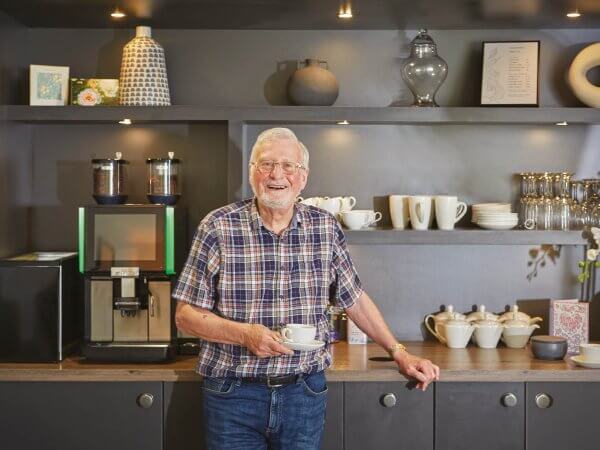
Homeowner Dr. Trevor, living at The Sidings, captures the personal renewal this kind of move offers:
“I’m more socially active here than I have been for a long time. I’d become totally isolated and an old curmudgeon!”
His story isn’t just one of emotional revival, it’s evidence of how legacy living improves mental health, social cohesion, and well-being.
Choosing to downsize says: “I want to live well, right now, and I want a better chance for those who follow.”
It reshapes your identity, from keeper of the house to giver of opportunity.
It multiplies your impact. A thoughtful decision today can signal responsible stewardship to your family and your community.
A legacy doesn’t have to be locked in a will. It can be the intangible ripple that comes from living well and wisely. When you move to a comfortable, maintained, community minded apartment, you’re not stepping away, you’re stepping forward.
You’re freeing up a home for a young family, and rebalancing the housing market, one thoughtfully sized apartment at a time. That’s a legacy beyond four walls.

Homeowner Margaret gives sound advice on not having to dread a move,
“When it came to downsizing, it was rather an overwhelming challenge as I was very attached to our home, but Adlington gave me valuable support, which was brilliant.”
Read more homeowner stories or find a community near you
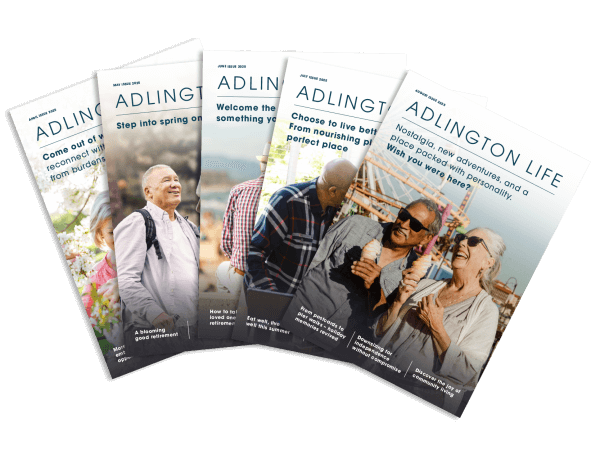
From well-being tips to real homeowner stories, our monthly magazine brings community to life.