
The joy of a garden without the graft
For many of us, a garden becomes part of the story...

Every October, witches appear in shop windows, draped in black robes, flying broomsticks, and cackling over cauldrons, but behind the commercialised image lies a darker truth rooted in fear, misunderstanding, and centuries of punishing women who dared to step beyond the expectations of their time.
As we reflect on stories from the past this autumn, perhaps it’s time to reconsider who the ‘witches’ really were and why society worked so hard to silence them.
Between the 16th and 18th centuries, thousands of women across Britain and Europe were accused of witchcraft. In Scotland alone, over 4,000 people (mostly women) were tried under the Witchcraft Act of 1563, with at least 2,500 executed. Their crimes? Many were herbalists, midwives, widows, or simply women who lived independently, spoke out, or held knowledge deemed suspicious.
“Witch hunts were a tool of control often aimed at women who posed a threat to the status quo,” explains historian Dr Louise Yeoman, who has worked to bring public attention to these injustices.
In 2022, Scotland’s First Minister Nicola Sturgeon offered a formal apology to those accused, acknowledging the deep injustice they suffered. The apology followed years of campaigning by Witches of Scotland, who continue to call for pardons, memorials, and education. “They were accused and, in many cases, killed simply because they were poor, different, or defied the norms of the time. They were wronged and we owe it to them to say so,” she said.
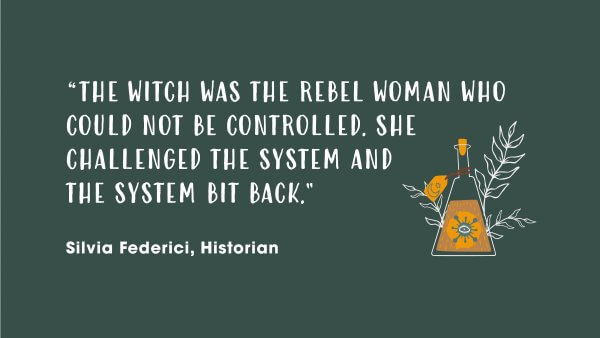
Many witchcraft accusations began close to home with neighbours, family members, or local disputes over land, animals, or health. While women also made accusations, it was men in power, clergymen, magistrates, and landowners, who prosecuted and punished.
Healers and midwives were labelled as dangerous. Widows or unmarried women were called suspicious simply for surviving on their own. Religion also played a key role. Clergy painted witches as heretics consorting with the devil. In 1487, two German inquisitors wrote the infamous Malleus Maleficarum (The Hammer of Witches), which branded women as “more carnal” and susceptible to evil. It became a blueprint for brutal interrogations and executions across Europe.
Fast-forward to today, and the idea of the “witch” is being reimagined. Modern witches are often aligned with nature, mindfulness, and personal power from tarot cards and herbal teas to community care and sustainable living. Many see the witch not as a threat, but as a symbol of female wisdom and independence.
“It’s about reclaiming the power that comes with age, intuition and knowing who you are,” says Alice Tarbuck, author of A Spell in the Wild.
Here’s the thought-provoking twist: if many of today’s women or their daughters had lived during the witch-hunting years, they may well have been at risk too. After all, this current generation saw huge social change. Women entered higher education in record numbers. They became scientists, teachers, entrepreneurs and community leaders. Many lived independently, spoke their mind, and made life choices outside convention. These are the very qualities that once would have marked them out as “dangerous”. And yet, today, those same women are the storytellers, the nurturers, the trailblazers in our communities. They’re
not feared, they’re revered.
That caricature was born from 17th-century propaganda woodcuts, later exaggerated in Victorian illustrations and fairy tales. It was no accident that these depictions were deliberately crafted to mock, belittle and distort women who once held positions of knowledge, intuition, and community trust.
So, this October, let’s not dress the witch as a cartoonish villain. Let’s reclaim her, not as something to fear, but as something to admire. A symbol of what happens when women refuse to be silenced. Let’s honour the women who came before, and those still here, who hold space for others, challenge assumptions, and live life on their own terms.
Everyday self-care rituals from the modern witch’s handbook
1. Brew with intention
Turn your morning cuppa into a grounding ritual. As the kettle boils, take a moment to breathe deeply. Stir slowly, and set a kind thought or intention for the day — peace, energy, connection. A mindful moment in a mug.
2. Touch nature daily
Whether it’s watering a houseplant, picking herbs, or walking in the garden, connecting with something green is proven to boost mood and lower stress. No spell required, just slow observation, and a little fresh air.
3. Light to invite calm
Lighting a candle isn’t just for ambience. It creates a signal to pause. Try it with your evening bath, book or simply before bed. As the flame flickers, let your thoughts settle — your breath will follow.
Each month you can explore more thought-provoking topics like this with our free magazine, emailed to your inbox every few weeks, with no obligation.