
The joy of a garden without the graft
For many of us, a garden becomes part of the story...

Taking care of your ageing parents and everyone else and it feels never ending? Sometimes giving ageing relatives more freedom can give you yours back too.
You arrive at your desk in the morning, laptop open, messages pinging and already part of your mind is having to be with a parent: Are they up OK this morning? Have they taken their medicine? Is dinner planned for tonight? Did the boiler repairman visit?
This mental load, often invisible to others, is one of the heaviest burdens for carers juggling full-time work and family.
According to Carers UK’s State of Caring 2024 survey, 73% of carers in employment say they find it stressful to juggle work and care, and 44% have reduced their working hours because of their caregiving responsibilities.
What’s more, one in eight workers in the UK are also balancing caregiving duties as the ‘sandwich generation’ simultaneously supporting ageing parents and children. In 2025, a report by website Carents showed 71% of carers had to change their role, reduce hours, or even leave employment to cope.
These are not just statistics, they reflect hidden stress, sleepless nights, and the feeling of running on empty. And that’s not to mention the silently bitter taste of having to compromise a much loved and hard-worked-for career.
Reprioritising doesn’t mean you stop caring, it means you change how you care, so you don’t burn out in the process. By relinquishing the burden, or reframing how responsibilities are shared, you can regain focus, energy and emotional balance.
In retirement communities, like ours, many services and supports are already built-in, such as, maintenance, social engagement, well-being checks, emergency response and on-the-doorstep facilities that lets family caregiving become a support role, not a full-time job.
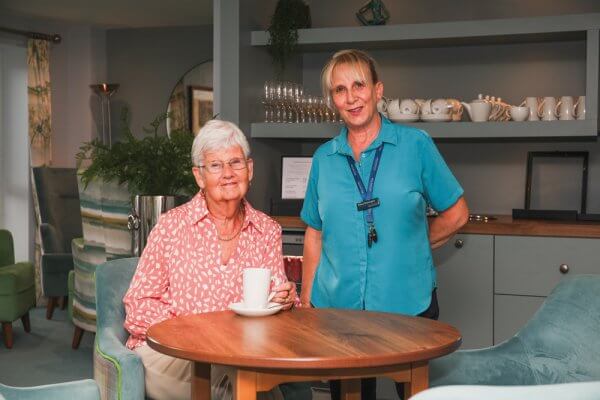
Homeowner Margaret in the homeowners lounge with a duty manager
Work performance & wellbeing – juggling dual roles isn’t easy. Mental strain, fatigue and “presenteeism” (being there, but not fully present) are real drains. Deloitte estimates that poor mental health among employees costs UK firms £51 billion a year, with carers often absorbing the most impact. Reprioritising gives clarity and space to do your job with more focus and to give your best where it counts.
Family relationships – when you free yourself from full time crisis management, you reclaim your role as child, sibling or partner, not just as caregiver. Having more personal bandwidth allows for deeper, more meaningful connections to be restored.
Health & longevity – chronic stress takes a toll on your immune system, sleep, mood and relationships. A life built on too much giving leads to depletion, so shifting responsibilities early is preventive, not reactive.

Afternoon tea together in the summer house
Not many sign up to become 24/7 support staff to a relative. You’re here to be a son, daughter, partner, or friend. Caring is part of love, but it shouldn’t consume your identity.
If right-sizing, retirement community living, or thoughtfully repositioning responsibility gives your loved one independence and dignity, gives your family breathing room, and gives you focus again, then it’s not a cost or a defeat, it’s a gift.
So, ask yourself: Is it time to reprioritise? Is it time to let caring about my loved one become new possibilities, and quality time together can again be enjoyed.
Make now the time to start thinking about that new approach, before it’s too late.
Our team is always happy to help you explore the options available, so you can make the right move with confidence. Explore a Adlington Retirement Living community near you or find out more about looking for a loved one

From well-being tips to real homeowner stories, our monthly magazine might help to reassure.